How Cockroaches Crash Into Walls and Keep Going
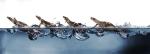
Submitted by rhkayen on Wed, 02/14/2018 - 07:45Anyone who’s tried to kill a cockroach knows that the ancient pests have some world-class evasive maneuvers. Or at least they appear to.
Anyone who’s tried to kill a cockroach knows that the ancient pests have some world-class evasive maneuvers. Or at least they appear to.
“Paleontologists have come up with various kill scenarios for mass extinctions, but plant life may not be affected by dying suddenly as much as through interrupting one part of the life cycle, such as reproduction, over a long period of time, causing the population to dwindle and potentially disappear,” said co-author Cindy Looy, a UC Berkeley associate professor of Integrative Biology.
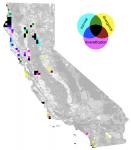
The first “big data” analysis of California’s native plants, using digitized information from more than 22 herbaria and botanical gardens around the state, provides some surprises about one of the most thoroughly studied and unique areas in the country.
For one, the state’s arid regions, including deserts such as Death Valley, are hotspots for originating new plant species and providing refuges for older plants that have disappeared elsewhere.
Take a look inside the newest IB Newsletter!
Robert Full wants to tap the diverse experiences of UC Berkeley undergraduates to teach them the fun of discovering biology’s secrets and the innovations that can spring from hacking them.
The Howard Hughes Medical Institute (HHMI) announced today that 14 leading scientists have been named HHMI professors, an award that recognizes excellence in research and education and empowers recipients to explore new approaches to important challenges in science education. HHMI is awarding 10 individual grants of $1 million each and two grants for collaborative projects that will receive a total of $1.5 million each over five years.
This award recognizes and rewards early career scientists for research excellence and potential in microbiology and infectious disease.
The American Academy of Microbiology is the honorific leadership group within the ASM, the world's oldest and largest life science organization. The mission of the Academy is to recognize scientists for outstanding contributions to microbiology and provide microbiological expertise in the service of science and the public.
Each year the Division of Comparative Physiology and Biochemistry recognizes a young investigator for distinguished contributions to comparative physiology and biochemistry or to related fields of functional and integrative biology. The award offers the awardee a fantastic opportunity to communicate this research via a large lecture at this year's SICB conference.
The IB department is introducing a new course this Fall, IB 77A: Integrative Human Biology. For this course, a different Integrative Biology faculty member will give a one hour lecture each week on how their research field contributes to our understanding of human biology.
Full Course Description and Syllabus
Our deepest sympathy goes out to Marian's family and friends.
Please read more about her incredible accomplishments here...