Newly Initiated Research Projects
Biogeomorphology
Food Webs in acid mine drainage
Tributary effects
on cross-habitat exchange of energy, nutrients, and contaminants
Floodplain restoration in
the Cosumnes River
Riparian restoration in the Middle
Sacramento River
Seasonal Elevational activity-abundance
of bats and insect prey in Yosemite National Park |
Biogeomorphology
Several future projects are
planned in collaboration with ecosystem scientists, earth scientists
and engineers in a newly funded (as of August 2002) NSF Science
and Technology Center, the National
Center for Earth Surface Dynamics (NCED), based at the St.
Anthony Falls Hydraulics Laboratory, St. Paul, Minneapolis.
The Angelo Coast
Range Reserve will be a primary experimental field laboratory
for these collaborations.
Physiology to food webs in river networks. What is
the influence of landscape (drainage network) position on the distribution
and abundance, performance, and food web interactions of key organisms?
To what degree are network distributions explained by the physiology
and natural history of a particular species, and to what degree
do population and community level phenomena play controlling roles?
Scaling
in river-watershed ecosystems. How do controls over processes
like stream metabolism or material fluxes and retention vary as
we increase spatio-temporal scales? Where and why in scale
transitions do scale dependent regime changes occur, and where do
phenomena appear to be 'scale free'?
Energy
sources and interaction strength in food webs. What are
the spatial dimensions of interactions and fluxes affecting food
webs? What is the relationship between spatial energy sources
and the strength of local species interactions?
Feedbacks
from biota to landscapes. How do organisms influence earth
surface processes and landscape evolution? |
Food
Webs in acid mine drainage
This collaboration builds on
previous research by Jill
Banfield (an NCED co-PI) and her Berkeley group on adaptations
and biogeochemical impacts of extremophile microbes in acid mine
drainage, with pH (<1) and temperatures of 50°C ( AMD
Home website). Other collaborators include Phil Hugenholz,
Wayne Getz, Jeff Boore (DOE Joint
Genome Institute) and Jo
Handelsman (U. Wisconsin, Madison).
Species impacts on ecosystems near steady state. What
are the roles and impacts on ecosystem productivity (H2SO4
production) of various members of acid mine drainage communities
at 'steady state'? Can we predict their importance from
genomics?
Recovery from disturbance. What are the impacts
of disturbance and the mechanisms of succession in acid mine drainage
communities? How do earlier colonizing (or re-activating)
organisms affect later arrivals, the environment and community
structure during succession?
|
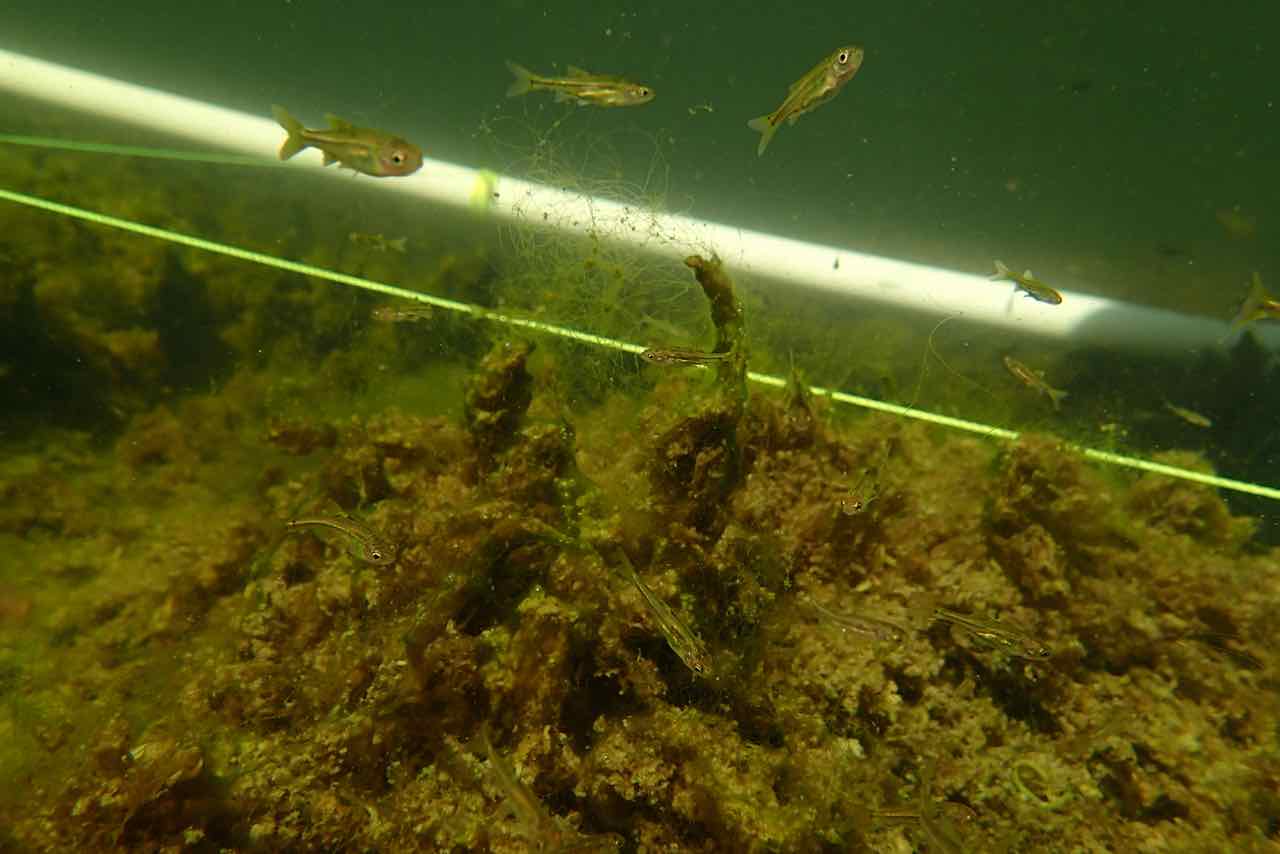
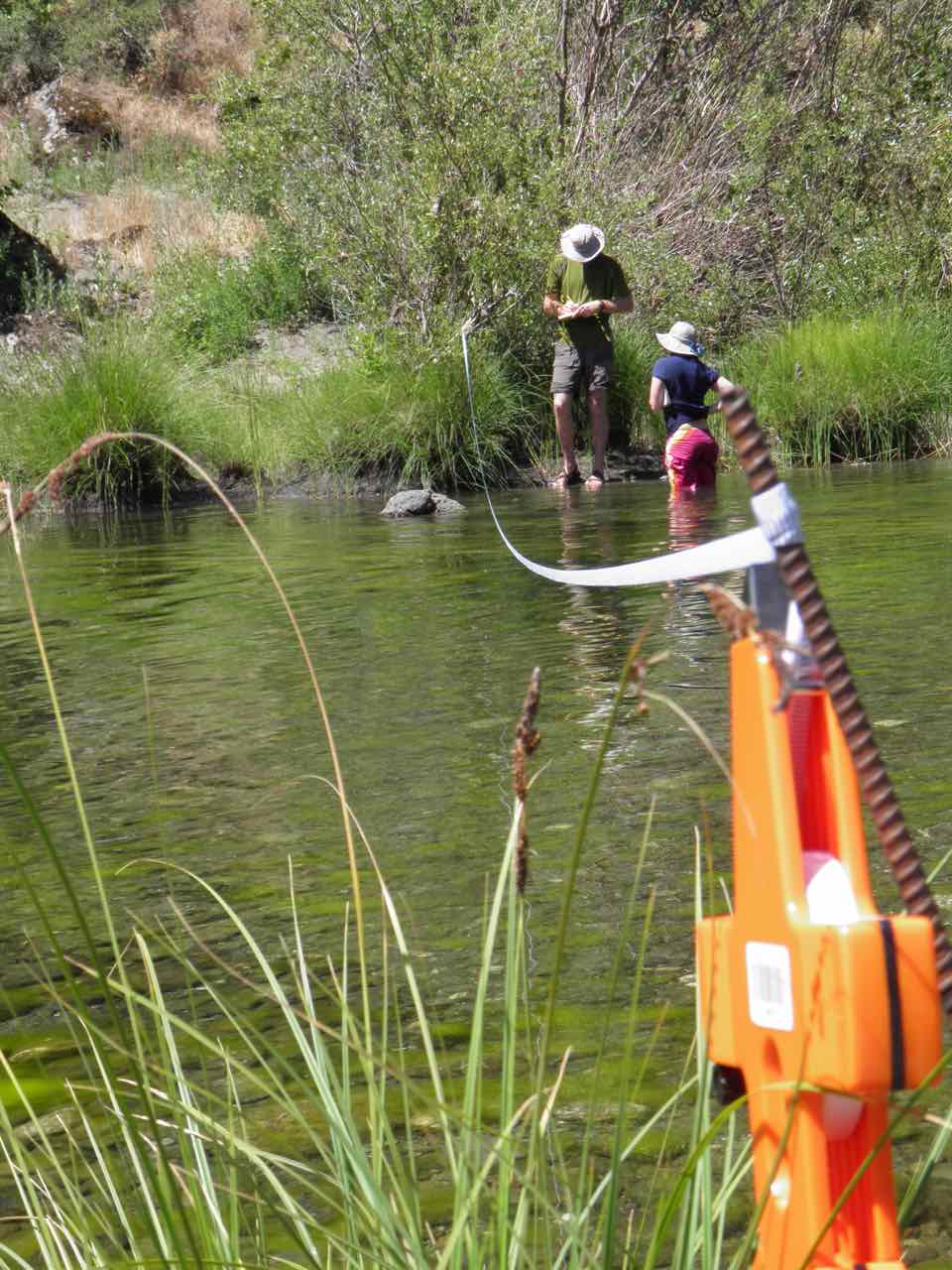
Tributary effects
on cross-habitat exchange of energy, nutrients, and contaminants
This collaboration with Bill Rainey
and Gilbert Cabana
(Université du Québec à Trois-Rivières)
examines cross-habitat effects at confluences of less productive
tributaries with more productive mainstem channels. In the
Truckee, South Fork Eel, and Upper Sacramento Rivers, we are investigating
how tributary and mainstem food webs interact, and the specific
effects of juxtaposition of contrasting habitats, and movements
of consumers and resources across their boundaries.
What is the influence of tributaries on cross-habitat ecological
exchanges between rivers and watersheds, or between mainstem and
tributary channels or riparian zones?
|
Floodplain restoration
in the Cosumnes River
As part of the Cosumnes
Research Group lead by Jeff
Mount and Jim Quinn
at U.C. Davis, we plan to investigate the influence of floodplain
inundation and floodplain vegetation structure on emergent
insects & aerial insectivores and floodplain soils. The Cosumnes
Reserve is partially owned by The
Nature Conservancy, an active participant in this project. For
more information on the reserve itself see www.cosumnes.org.
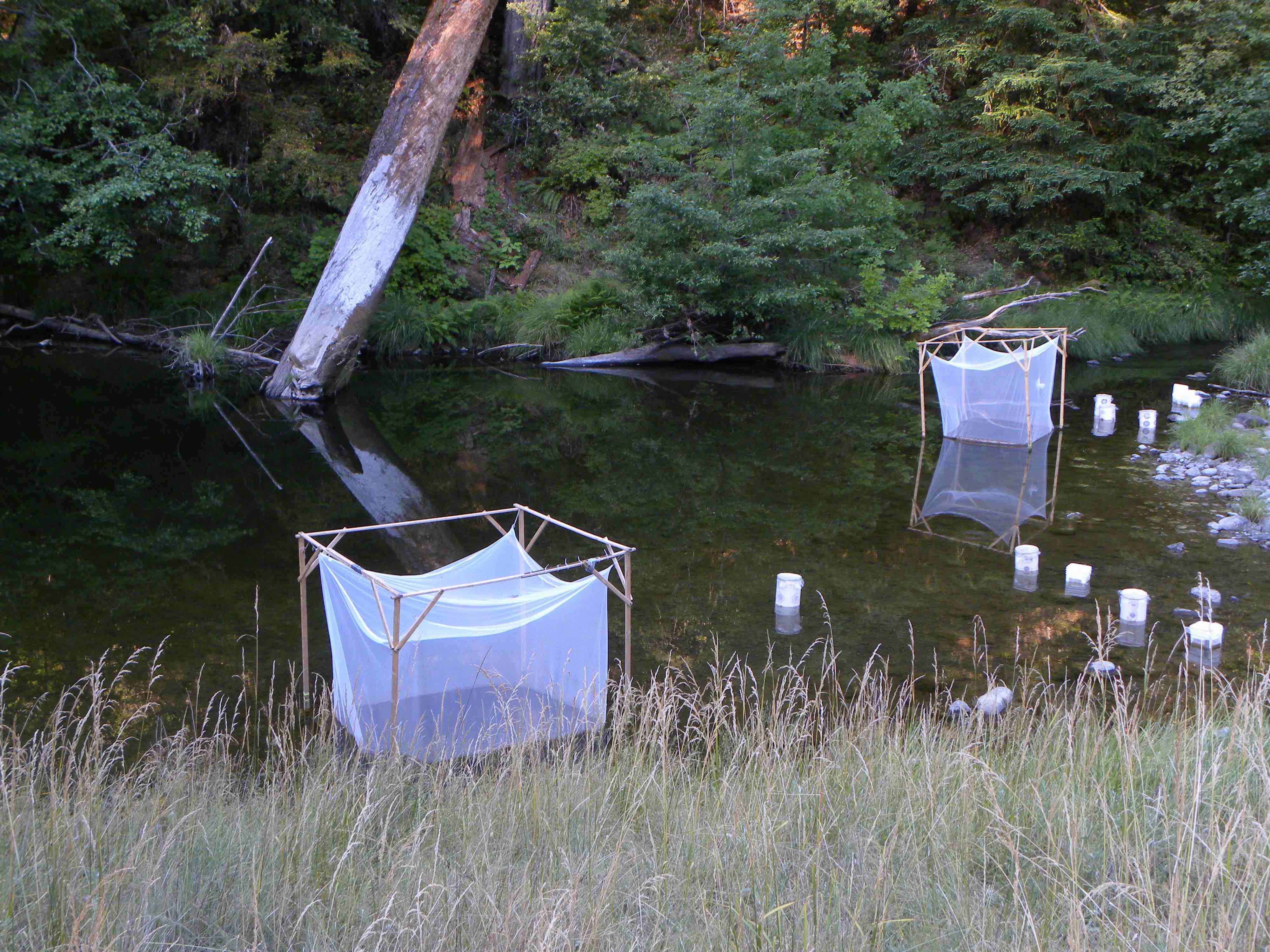
Emergent insects. Led by bat biologist Bill
Rainey our group will investigate how the inundation regime
(the residence time of water and seasonal timing of spillover
and reconfinement) and the structure of seasonally inundated stands
of trees, forbs, grasses influence abundances and activity of
emerging aquatic insects, and the ability of insectivores to track
them. We will collaborate with meteorologists and turbulence
experts at UCD and NCED to measure impacts of vegetation and wind
speed on air turbulence patterns that advect and concentrate insects.
These structures and processes may also alter insectivore (bat,
bird, spider, adult odonate) activity and their ability
to track prey.
Floodplain soils. We have long known that river inundation
restores the fertility of agricultural floodplain lands, but how?
Postdoc Sandra Clinton
will examine the processes that vector products of the aquatic
food web into soils after reconfinement. The consequences
for soils of different ecosystem states during inundation will
be investigated.
|
Riparian
restoration in the Middle Sacramento River
The Nature Conservancy, under leadership of TNC ecologist Greg
Golet, is replacing senescent orchards with native riparian trees
and shrubs as part of restoring communities and natural processes
along the Middle Sacramento River (website).
In collaboration with scientists at Stillwater
Sciences, Inc. (a Berkeley-based environmental consulting company),
we are looking at three response variables which may help the TNC
measure the state and direction of change in and around these restored
ecosystems.
Bat diversity and activity/abundance in contrasting terrestrial
(riparian forest remnants, different age restorations and
orchards) and aquatic sites (river main stem and backwater).
Landscape distribution of stable nitrogen and carbon isotopes, which
can indicate land use effects (e.g., nitrogen loading from
livestock) and the linkages of ecosystems over various spatial
scales.
Distribution,abundance, diversity, and carbon sources of benthic
and drifting aquatic insects in mainstem and tributary channels
important for salmonid rearing.
|
Seasonal
Elevational activity-abundance of bats and insect prey in Yosemite
National Park
This study is led by Dr. Elizabeth (Dixie) Pierson, in collaboration
with Bill Rainey,
Chris Corben, Les Chow (USGS), and Mary Power with support from
the Yosemite Fund via the National Park Service. Its motivating
question emerged from previous investigations of seasonal
distributions of bats in Yosemite.
How are bat activity/abundances and species diversity
at different elevations related to the local seasonal availability
of insects? We are conducting monthly surveys of bats
within four 2000' wide bands of elevation, in a variety of habitat
types (wet meadows, rivers, creeks, forests). Concomitant sampling
of insect emergence, and activity-density of flying insects
in light traps, give relative indices of prey availability, which
are influenced by seasonal changes in surface water and temperature
along the elevation gradient.
|
|